📍 Contact Us
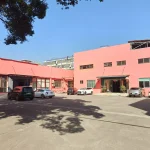
Factory Address:
Building 8, No.2-1, Nanyi Road,
Yongshan Village, Shiji Town,
Panyu Dist., Guangzhou, China.
Yongshan Village, Shiji Town,
Panyu Dist., Guangzhou, China.
Authored by: PrintVision Technology & Business Strategy Team
The global market for personalized promotional products and bespoke packaging is experiencing unprecedented growth. According to industry reports from the PRINTING United Alliance, the demand for custom hard-surface goods—from insulated tumblers to premium cosmetic boxes and sports helmets—is projected to reach record highs in 2026.
Historically, the only way to service this market digitally was by investing in a traditional UV Flatbed Printer. However, a revolutionary technology is rapidly replacing the flatbed standard: UV DTF (also known as Crystal Label printing).
If your print shop is looking to dominate the hard-surface customization market, here is the definitive 2026 comparison from the PrintVision R&D team on why UV DTF is the superior investment.
The Traditional UV Reality: UV Flatbed printers operate on a rigid X-Y-Z axis. They are brilliant for printing on flat signboards or perfectly cylindrical objects (using a rotary attachment). However, if a client wants their logo on an irregularly shaped object—like a curved motorcycle helmet, a faceted perfume bottle, or a textured golf bag—a traditional flatbed simply cannot maintain the precise printhead gap required, resulting in distorted images or head crashes.
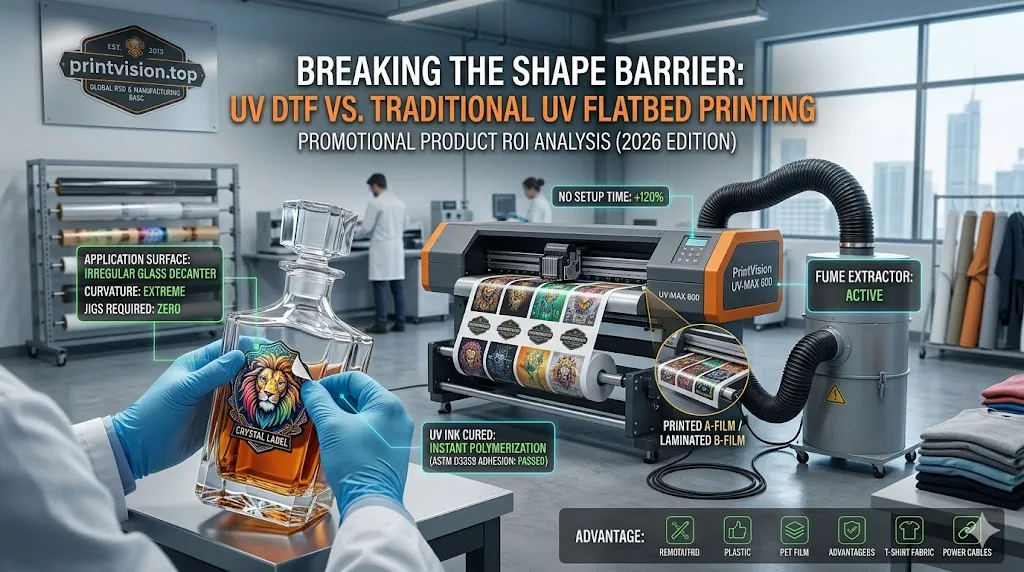
The UV DTF Advantage: UV DTF completely bypasses the physical limitations of the object. Using a PrintVision UV-MAX Roll-to-Roll Printer, you print the CMYK+White+Varnish design directly onto a specialized transfer film (A-Film), which is then laminated with an adhesive backing (B-Film). The result is a premium “Crystal Label” that can be manually applied to any shape, curve, or corner with a simple rub-and-peel process. You are no longer restricted by the height or geometry of the substrate.
The Traditional UV Reality: Printing on objects like pens, phone cases, or golf balls with a flatbed printer requires specialized acrylic or metal “jigs” (molds) to hold the items perfectly in place. Manufacturing these custom jigs for every new product shape is expensive, time-consuming, and severely delays production turnaround times.
The UV DTF Advantage: UV DTF requires zero jigs. You can print hundreds of different logos, sizes, and designs on a single, continuous roll of A-Film in one uninterrupted run. Once printed, these labels can be cut and applied individually on-demand. This zero-setup workflow reduces your prepress time by up to 80%, allowing you to accept highly profitable micro-orders without
setup fees.
A common misconception is that a transferred “label” won’t be as durable as direct UV printing. In 2026, the material science behind UV DTF has evolved beyond this myth.
The Science of Adhesion: PrintVision’s UV DTF ecosystem utilizes industrial-grade, eco-friendly glues on our B-Films. Once the UV ink is cured and transferred, the bond undergoes a cross-linking process with the substrate. Our Crystal Labels are engineered to pass the rigorous ASTM D3359 Cross-Hatch Adhesion Test, ensuring they are highly resistant to scratching, water, and daily wear-and-tear on materials like glass, metal, wood, and acrylic.
The Traditional UV Reality: Industrial UV Flatbed printers are massive machines that require significant warehouse floor space, heavy-duty electrical setups, and dedicated operators.
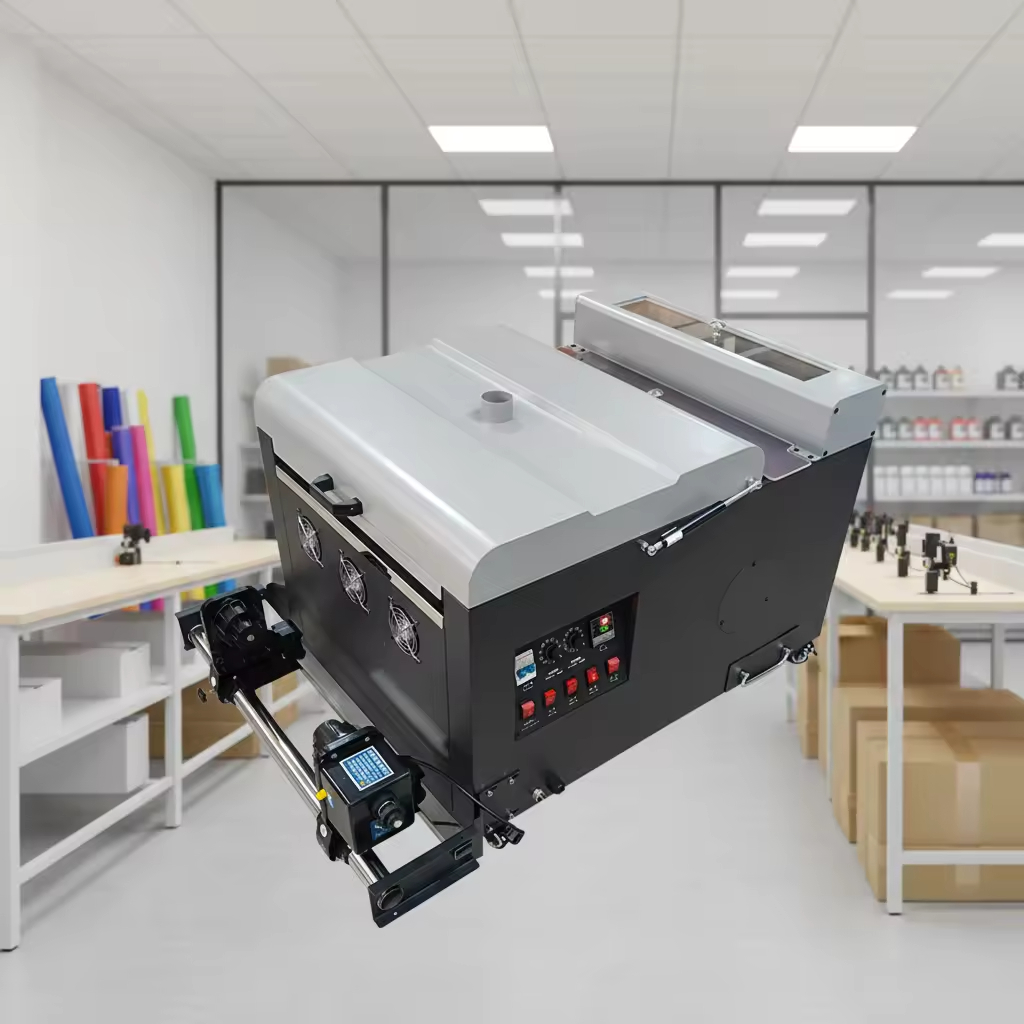
The UV DTF Advantage: A complete PrintVision UV DTF production line—including the printer and the automatic laminator—has a remarkably compact footprint. It fits easily into a standard commercial office space. Furthermore, the initial capital investment for a roll-to-roll UV DTF system is generally a fraction of the cost of a large flatbed, leading to a much faster Return on Investment (ROI).
Traditional UV Flatbed printing still has its place for large-scale, flat signage boards. However, for the booming promotional product, packaging, and bespoke gift markets, UV DTF is the undisputed future.
By investing in PrintVision’s UV DTF technology, you break the shape barrier. You can confidently tell your clients, “If it has a hard surface, we can brand it.”
Ready to unlock the ultimate promotional product workflow?
Visit www.printvision.top today to consult with our global sales team and request a free sample pack of our ultra-durable Crystal Labels.