Phone:
(701)814-6992
Physical address:
6296 Donnelly Plaza
Ratkeville, Bahamas.
Phone:
(701)814-6992
Physical address:
6296 Donnelly Plaza
Ratkeville, Bahamas.

One of the main reasons DTF printing (Direct to Film printing) has expanded so rapidly across global markets is its exceptional material compatibility. Unlike traditional garment printing methods that struggle with fabric limitations, DTF printing allows businesses to work confidently with a wide range of substrates using a single, unified workflow.
In real production environments, three materials appear most frequently:
Each material presents unique challenges in printing, adhesion, durability, and appearance. This article explains how DTF printing performs on these materials in real-world production, what results businesses can expect, and how to optimize outcomes for each fabric type.
In traditional printing workflows, fabric type determines:
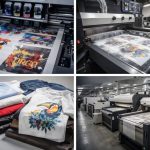
DTF printing changes this logic by separating image creation from material transfer. The design is printed on PET film first, then transferred to fabric using heat and pressure. This approach dramatically reduces the dependency on fabric-specific printing techniques.
According to general textile classifications outlined in materials science references such as Wikipedia’s textile overview
https://en.wikipedia.org/wiki/Textile
fabric structure and surface behavior directly affect ink adhesion and durability. DTF technology minimizes these variables.
Cotton is the most commonly used textile in the apparel industry. Its natural fibers provide:
These properties make cotton highly compatible with DTF transfers.
DTF prints on cotton typically show:
Because cotton fibers can withstand consistent heat, the adhesive layer bonds evenly across the surface.
When properly cured:
Industry wash testing principles align with textile durability concepts discussed in fabric care standards
https://en.wikipedia.org/wiki/Textile_testing
Cotton remains the lowest-risk material for businesses entering DTF production.
Polyester has long been problematic for:
Heat sensitivity and dye migration are common challenges.
DTF printing avoids direct ink interaction with polyester fibers. Instead:
This makes DTF especially suitable for:
Polyester requires:
Failure to adjust heat settings can cause fabric distortion rather than print failure.
In real factory environments, DTF allows polyester printing without:
This reduces operational complexity and inventory cost.
Leather is:
Traditional printing methods often fail due to poor ink adhesion.
DTF printing transfers:
The adhesive bonds to the leather surface rather than penetrating it.
DTF prints on leather typically result in:
This aesthetic is often desirable for:
For leather:
Leather printing requires precision, not speed.
| Material | Print Quality | Adhesion | Durability | Risk Level |
|---|---|---|---|---|
| Cotton | Excellent | Strong | High | Low |
| Polyester | Very Good | Strong | High | Medium |
| Leather | Good | Moderate–Strong | Medium | Higher |
Understanding these differences allows businesses to price products accurately and manage customer expectations.
In industrial settings, DTF printing on mixed materials offers:
This flexibility aligns with modern production models discussed in digital textile printing industry analysis by organizations such as FESPA
https://www.fespa.com
DTF printing reduces:
Sustainability considerations align with manufacturing efficiency principles promoted by environmental agencies such as the U.S. Environmental Protection Agency
https://www.epa.gov
While DTF is not “zero impact,” it offers better resource control than many traditional methods.
Each material requires optimized parameters.
Leather and textured polyester need adjusted pressure.
Production testing prevents costly batch failures.
Successful businesses:
DTF allows all three within a single production system.
DTF printing delivers reliable, high-quality results across cotton, polyester, and leather when correctly applied. Its ability to unify production workflows while supporting diverse materials is a key reason why businesses worldwide are adopting DTF as a core technology.
For companies seeking flexibility, scalability, and consistent results, DTF printing is not just an option—it is a strategic production advantage.