Authored by: PrintVision Material Science & R&D Team
In the Direct-to-Film (DTF) process, your printer creates the visual magic, but the Hot Melt TPU (Thermoplastic Polyurethane) Powder is the literal glue that holds your business together.
Many print shop owners experience frustrating inconsistencies: powder sticking to unprinted areas of the film, transfers feeling too stiff, or prints peeling off after a few washes. In 90% of these cases, the operator is using the wrong type of powder for their specific geographical climate or target fabric.
In 2026, a “one-size-fits-all” approach to consumables is a recipe for failure. Today, the PrintVision Material Science Team breaks down how to select the precise TPU powder to ensure global durability, whether you are printing in the humid tropics or a dry desert environment.
1. The Climate Factor: Humidity vs. Static Electricity
TPU powder is highly sensitive to environmental moisture and static electricity. Your local climate dictates how the powder behaves inside your Automatic Powder Shaker.
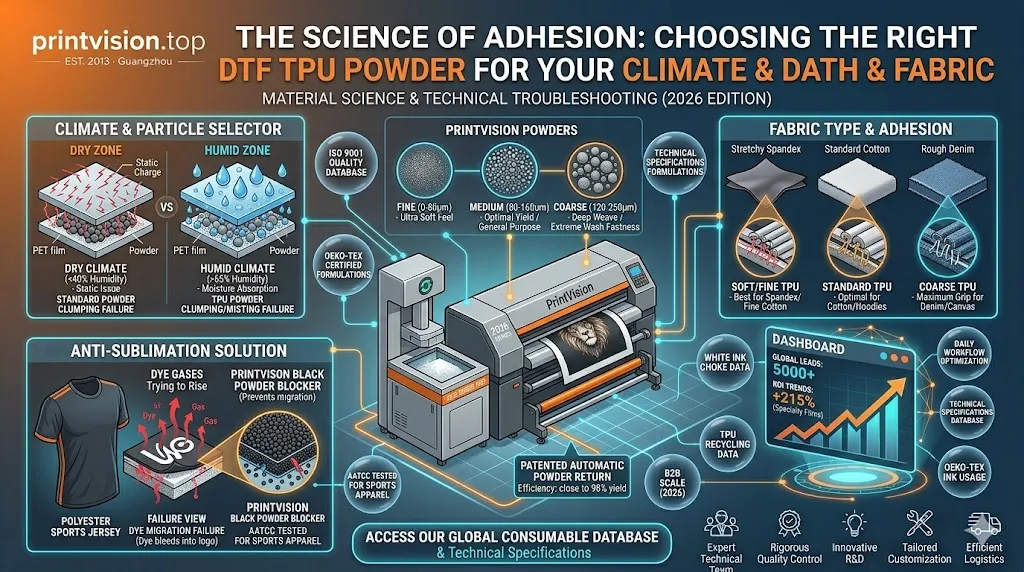
- Dry Climates (Low Humidity): In environments with less than 40% humidity, static electricity builds up rapidly on PET film. This causes the powder to magnetically cling to areas without ink, resulting in tiny white specks ruining the background of your garment.
- The Solution: In dry zones, you must use Anti-Static Treated TPU Powder and ensure your shaker machine is properly grounded.
- Humid Climates (High Humidity): TPU is naturally hygroscopic (it absorbs moisture from the air). In environments with over 65% humidity, standard powder will clump together, blocking the shaker’s mesh screen and causing uneven melting in the curing oven. This trapped moisture also severely weakens the final bond to the t-shirt.
- The Solution: PrintVision recommends utilizing climate-controlled storage and specifically formulated Low-Melt/Moisture-Resistant Powders that require less heat to activate, preventing moisture-induced bubbling.
2. Granularity: Fine, Medium, or Coarse?
The micron size of your powder directly affects the “hand feel” (thickness) of the transfer and its adhesion strength.
- Fine Powder (0-80 microns): Ideal for highly detailed logos, small text, and thin, stretchy fabrics like spandex or premium cotton blends. It creates an incredibly soft, breathable feel but provides slightly less aggressive adhesion for heavy-duty washing.
- Medium Powder (80-160 microns): The industry standard. It offers the perfect balance of a soft hand feel and excellent durability for everyday cotton t-shirts and hoodies. This is the optimal granularity for PrintVision’s patented powder recycling systems.
- Coarse Powder (120-250+ microns): Reserved for heavy-duty applications like denim, canvas bags, and rough outerwear. Coarse powder melts into a thicker glue layer, forcefully gripping into deep fabric weaves to ensure extreme wash fastness.
3. Conquering Dye Migration: Anti-Sublimation Powder
If you print on dark polyester garments or sports jerseys, you are likely familiar with “dye migration”—where the dye from the garment sublimates under heat and bleeds into your bright DTF transfer, turning a white logo pink or grey.
- The Industrial Standard: To combat this, PrintVision supplies specialized Black Anti-Sublimation TPU Powder. This powder contains a specialized carbon blocking layer that cures at a lower temperature and prevents the garment’s dye gases from penetrating the white ink underbase.
- Tested for Durability: Our anti-sublimation solutions are engineered to withstand the rigorous wash-and-wear testing protocols established by the American Association of Textile Chemists and Colorists (AATCC), ensuring your sports apparel looks brand new even after an entire season of use.
Conclusion: Engineering the Perfect Bond
Your choice of TPU powder shouldn’t be an afterthought based on the cheapest price per kilogram. It is a vital engineering decision that affects your product quality, your machine maintenance, and your brand reputation.
By matching the correct PrintVision OEKO-TEX® certified TPU powder to your specific climate and fabric demands, you guarantee a flawless, high-margin transfer every single time.
Struggling with inconsistent adhesion or climate issues?
Visit www.printvision.top today. Contact our global technical support team for a personalized material consultation based on your geographical location and production goals.