📍 Contact Us
Factory Address:
Building 8, No.2-1, Nanyi Road,
Yongshan Village, Shiji Town,
Panyu Dist., Guangzhou, China.
Yongshan Village, Shiji Town,
Panyu Dist., Guangzhou, China.

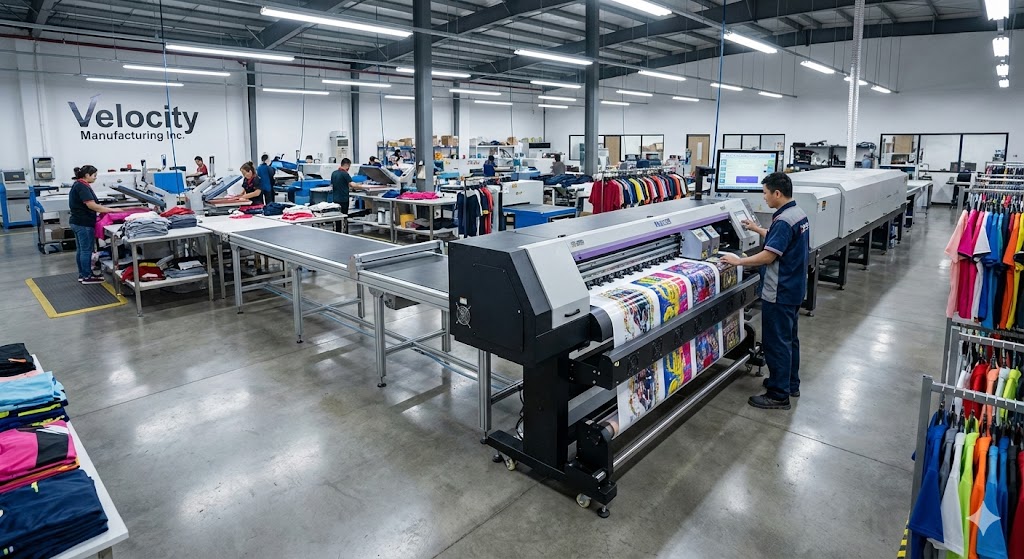
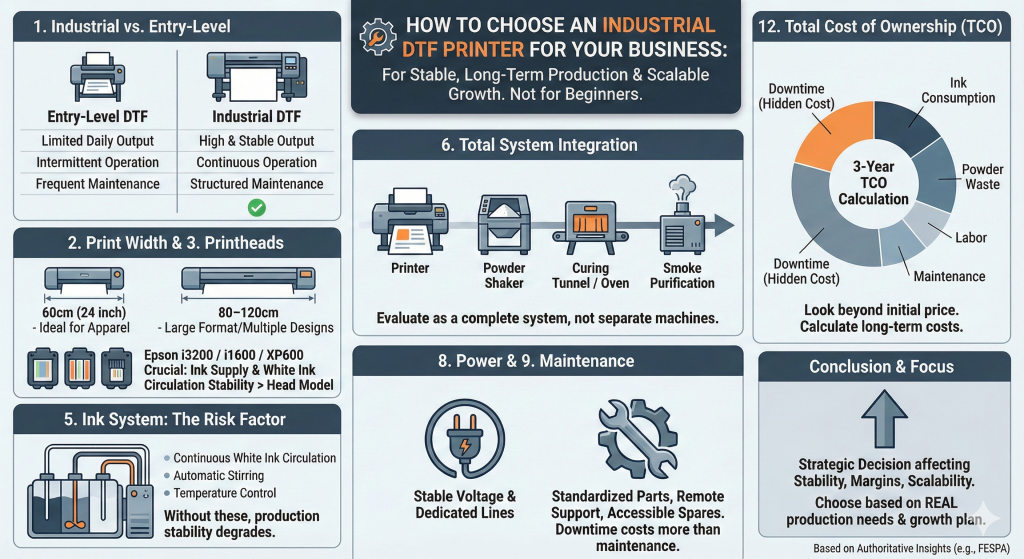
In recent years, many apparel factories have faced increasing pressure from shorter order cycles, higher customization demand, and rising labor costs. Traditional printing methods that once supported mass production are no longer flexible enough to meet modern market expectations.
This case study examines how a mid-sized apparel factory successfully transitioned from conventional printing methods to an industrial DTF printing system, achieving higher production flexibility, improved efficiency, and long-term operational stability.
Rather than focusing on theoretical benefits, this article highlights real production challenges, decision-making logic, and measurable results from a practical business perspective.
The factory featured in this case study operates in the custom apparel manufacturing sector, producing:
Before adopting DTF technology, the factory relied mainly on screen printing, supplemented by outsourced digital printing for small orders.
Screen printing required:
For orders under a few hundred pieces, setup time often exceeded actual printing time, significantly reducing profitability.
The factory struggled to handle:
Each material required different inks and processes, increasing operational complexity.
Screen printing demanded skilled operators for:
As labor costs increased, maintaining consistency became more difficult.
The factory frequently rejected:
These orders increasingly dominated the market but were not compatible with traditional workflows.
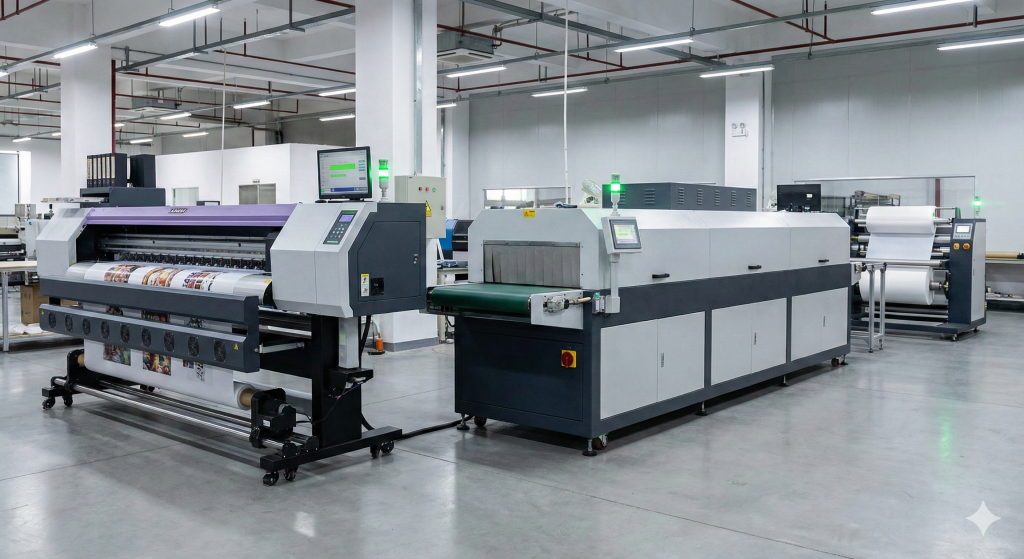
DTF printing was evaluated because it offered:
The decision aligned with broader industry shifts toward digital textile printing, a trend widely discussed in textile manufacturing overviews such as
https://en.wikipedia.org/wiki/Digital_printing
Rather than focusing on machine specifications alone, the factory evaluated:
This approach prevented overinvestment and ensured system suitability.
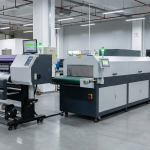
The factory selected an industrial DTF configuration consisting of:
The focus was on system stability, not just print speed.
Before installation, the factory prepared:
These steps are consistent with general industrial equipment safety principles described in manufacturing standards
https://en.wikipedia.org/wiki/Industrial_equipment
The system was installed with:
This reduced the learning curve and minimized early-stage errors.
Test runs were conducted on:
Parameter adjustments were made to optimize:
After adopting DTF printing, the factory could accept:
This expanded their customer base and improved competitiveness.
DTF allowed:
Production planning became more predictable and efficient.
Automation features reduced reliance on highly skilled manual labor, particularly in setup-intensive tasks.
This aligns with broader manufacturing automation trends discussed in industrial process optimization resources
https://en.wikipedia.org/wiki/Automation
DTF prints demonstrated:
Quality remained stable across different fabrics.
Properly cured prints showed:
These results are consistent with general principles of heat transfer adhesion described in textile printing references
https://en.wikipedia.org/wiki/Heat_transfer
While initial investment increased, the factory benefited from:
The factory focused on total cost of ownership, considering:
This strategic view supported sustainable growth rather than short-term gains.
Printer, powder shaker, and curing system must operate at compatible speeds to avoid bottlenecks.
Consistent daily and weekly maintenance ensured long-term stability and print quality.
Operator understanding significantly reduced errors and material waste.
This case reflects a wider trend in the apparel industry toward flexible, digital-first production models, driven by:
These trends are commonly discussed in apparel manufacturing evolution overviews
https://en.wikipedia.org/wiki/Apparel_industry
By adopting an industrial DTF printing system, this mid-sized apparel factory successfully transformed its production capabilities.
Key outcomes included:
This case demonstrates that DTF printing is not just a tool for small businesses, but a strategic solution for professional manufacturing environments.